Showing posts with label publishing. Show all posts

Friday, March 31, 2023

Experiencing Portugal and Lisbon Part II: Where to Stay, Where to Go, What to See

In the previous edition of our newsletter, we talked about Lisbon Portugal, which is enjoying a moment  in the spotlight that’s long overdue. We can't say enough how much we love Lisbon (and all of Portugal, even if driving the streets and highways is a bit of an experience that takes some getting used to). If you're looking to stay in Lisbon, you'll find no shortage of Airbnb rentals--rentals which change so much from month to month that there's no point in guiding you to one over another, especially with the ongoing effort by the local government to restrict and shutdown Airbnb rentals in the city. Don't worry, there's also no shortage of wonderful hotel rooms, and you'll have a wealth of choices. Some of our luxury favorites, based on quality and value:

  • Altis Belém Hotel & Spa - on the waterfront near Torre de Belém (Belém Tower) and Jardim da Torre de Belém (Belém Tower Gardens). Or alternatively NAU Palacio do Governador in the same area.
  • Hyatt Regency Lisbon  - near the waterfront with beautiful views of the Tagus and the Ponte 25 de Abril (25 April Bridge).
  • Hotel Vila Galé Collection Palácio dos Arcos - on a hillside near the waterfront with beautiful views.
  • Pousada de Lisboa, Praça do Comércio - A boutique luxury hotel across from Praça do Comércio, a waterside public plaza, and Arco da Rua Augusta, an ornate 18th century arch.

Other luxury accommodations to consider, based on quality and value:

  • Pestana Palace Lisboa
  • Olissippo Lapa Palace Hotel
  • The Emerald House Lisbon, Curio Collection by Hilton
  • As Janelas Verdes/Riverview, a Lisbon Heritage Collection
  • Corpo Santo Lisbon Historical Hotel
  • Palacete Chafariz d'El Rei
  • Pestana CR7 Lisboa

If you're driving and don't mind being up to 20-30 minutes outside the city, here are a few more luxury accommodations to consider, based on quality and value:

  • InterContinental Cascais-Estoril, an IHG Hotel
  • Hotel Cascais Miragem Health & Spa
  • Hotel Albatroz Cascais
  • Farol Hotel
  • Hotel Vila Galé Cascais
  • Grande Real Villa Itália Hotel & Spa
  • Fortaleza do Guincho
  • Senhora da Guia Cascais Boutique Hotel
  • The Oitavos

It's important to note that we probably look at luxury accommodations different than most. We've stayed at luxury hotels around the world, but multi-million-dollar lobbies don't impress us whatsoever and more than a few luxury hotels are guilty of having wonderful lobbies and not so wonderful rooms.  Fancy brands and fancy names don't impress us. What actually impresses us is the right combination of quality and value. To us, quality and value incorporates the locations/views, the rooms, and the experiences are worth more than walking into a stunning lobby and then finding the rooms are rather ho-hum. We say locations/views as there can be a tradeoff between having a great location, such as a central location near most everything you want to see and do, and having a great view, such as of the ocean or a mountain but then being in a less central location.

Another important note is that sometimes our stays are comp'd and there's been too many over the last thirty years to track which ones comp'd us and which ones didn't. If we mention a hotel, they probably comp'd us at one time or another, and we're not talking about them because of some comp years ago or even last year, we're talking about them because we genuinely enjoyed our stay and that joy stayed with us. Also important to point out our comps aren't for some random mention in a travel newsletter or a travel guide, they're because of our photography work.

As we discussed last time, the nightlife in Lisbon is good and often even great, as are the wealth of restaurants that range from inexpensive dives to fine dining. The combination of great places to eat and great places to stay is a strong reason to make Lisbon your home base when you visit Portugal. There also are other reasons, as the map shows. 

Drive three hours north and you can be in Porto, enjoying everything this other fabulous coastal city in Portugal has to offer, including the medieval district and the Palácio de Bolsa. Drive three hours south and you can be in Lagos Portugal, enjoying everything the Algarve coast has to offer, including sweeping coastlines with even more beautiful beaches and scenic rock formations to walled old towns and historic churches.


Seville in Spain is another beautiful city nearby. When we visit Lisbon, we make it a point to drive out to Seville as well since it's so close, as we talked about in the inaugural edition of our newsletter (https://www.linkedin.com/pulse/off-races-seville-spain-william-robert-stanek/).

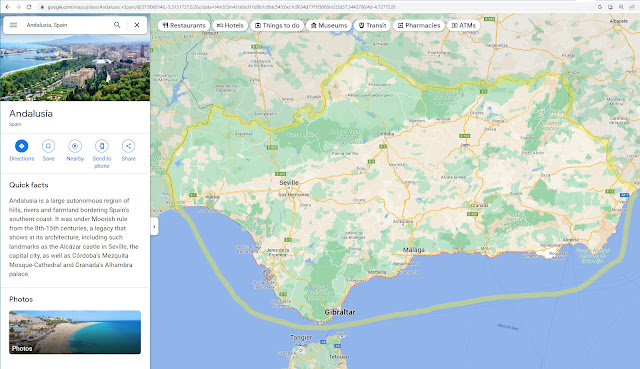
There are several common routes between Lisbon and Seville (see the map below), with the middle route being the most direct, if not the most scenic. If this is a roundtrip you are only going to make once, we suggest taking the top route through Badajoz on the way to Seville and the bottom route along the Algarve coast on the way back to Lisbon.
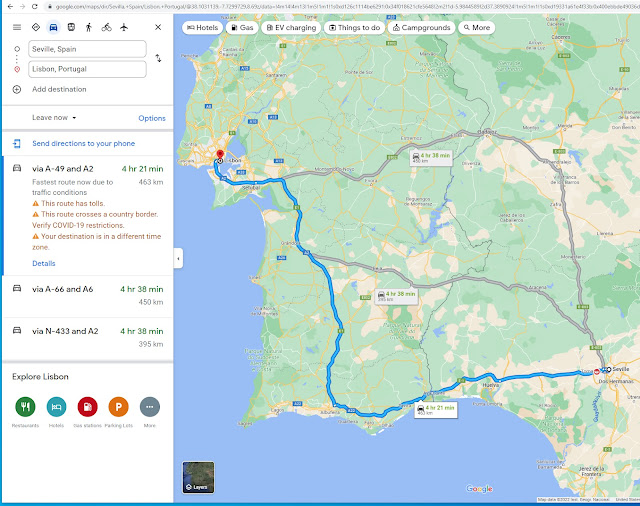

All of the routes take you eventually into Andalusia, one of the most famous regions of Spain. The whole Andalusia region is fantastic and well-known for its ceramics, embroidery and leather goods. With this in mind, be sure to stop in the rural shops, especially for the pottery. Each area has its own distinctive style and each craftsman makes the colorful plates, bowls and flower pots in different ways. Note that it's hard to get fragile pottery home in one piece even if you hand carry it, so keep that in mind when selecting pieces. Plates wrapped carefully will weather the journey home better than vases and such, and no matter how careful you are something may get broken.

Our favorite time of year for the drive is spring when the olive trees are in bloom. There’s nothing like driving with the windows down and drinking in the smell of olive trees in bloom. Plus, it's a gorgeous, scenic drive.
Back to Lisbon itself. Where to go and what to do in Lisbon? One starting point is Cais das Colunas on the waterfront. It's an 18th century quay with marble steps. Take a few pictures on the waterfront (and because of the sunset views, you may want to return here later as well). From the quay, you can go to nearby Praça do Comércio (Commerce Square). One of three main squares in the city.

Here, you'll find restaurants and clubs, places to sit outside with a glass of beer or wine. The square is also home to the Lisbon Story Centre, with it's inexpensive 60-minute tour of Lisbon's history. If you want tourist information, head across the square in the opposite direction. 

When you are ready to leave Praça do Comércio, walk away from the waterfront and cross the street to see the Arco da Rua Augusta. It's a stunningly beautiful 19th century triumphal arch. West down the street is another photo opportunity at Praça do Município (Municipal Square) and the exterior of City Hall. Continue walking down Rua do Arsenal and to Rua Nova do Carvalho. 
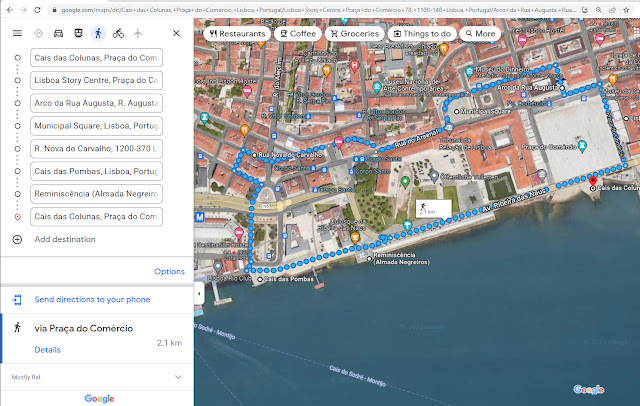

Also known as Pink Street, Rua Nova do Carvalho was formerly the red light district, but now it's famous for bars and night clubs. Afterward, you can walk back toward the waterfront and the panoramic scenic point of Cais das Pombas.

Here, you'll find a nice waterfront area where you also can take pictures of Lisbon's most beautiful bridge, Ponte 25 de Abril. Afterward, you can walk back along the river to where you started, optionally stopping at the Reminiscência sculpture. Total walking time is about an hour, without stops.

Here are the stops in a numbered list as well:
  1. Cais das Colunas, Praça do Comércio, Lisboa, Portugal
  2. Lisboa Story Centre, Praça do Comércio 78, 1100-148 Lisboa, Portugal
  3. Arco da Rua Augusta, R. Augusta 2, 1100-053 Lisboa, Portugal
  4. Municipal Square, Lisboa, Portugal
  5. Rua Nova do Carvalho, 1200-370 Lisboa, Portugal
  6. Cais das Pombas, Lisboa, Portugal
  7. Reminiscência (Almada Negreiros), Av. Ribeira das Naus, Lisboa, Portugal
  8. Cais das Colunas, Praça do Comércio, Lisboa, Portugal
 Other great places to visit in Lisbon:
  • Alfama, an old neighborhood full of narrow streets, houses and restaurants. Also some of the best Fado clubs for nightlife.
  • Cristo Rei, a statue of Christ on a hillside that also offers fantastic views of the Ponte 25 de Abril
  • Padrão dos Descobrimentos, a waterfront monument dedicated to sailors and discovers
  • Torre de Belém, a waterfront tower built in the 16th century
  • Sé de Lisboa, Lisbon Cathedral
  • Mosteiro de São Vicente de Fora, the monastery and church of St. Vincent
  • Igreja de Nossa Senhora, 16th century church
  • Castelo de São Jorge, a castle with a viewpoint that offers 360-degree views of Lisbon
  • Igreja de Santa Engrácia, a baroque church started in the 17th century but not finished until the 20th.
  • Museo do Carmo, a 13th century monastery and museum
  • Elevador de Santa Justa, an elevator with a platform at the top near Museo do Carmo

Well, that's Lisbon in a Nutshell. We hope your adventures are as wonderful as ours and hope to hear about your visits too.

-

Hui Cha Stanek and William Robert Stanek

William R. Stanek. The Black and White Collection #1: Fine Art Photography Rare Masters by William R. Stanek, HC Stanek, Hardcover | Barnes & Noble (barnesandnoble.com)... Our new photography book!


About Hui Cha Stanek

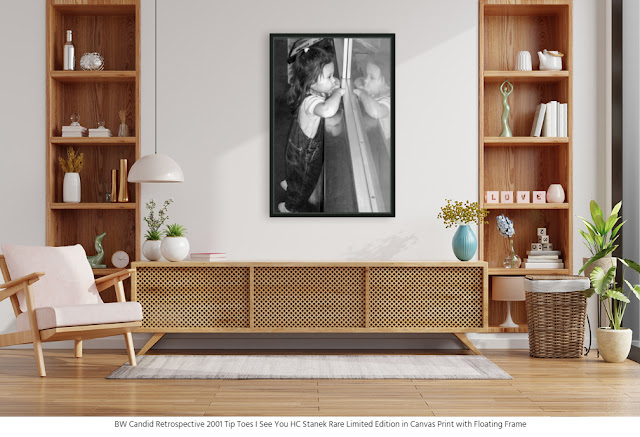
Erstwhile Photographer and Long-time Publisher Hui Cha Stanek has always been the woman behind the scenes. She has managed the day-to-day operations of Stanek Media for the past three decades. Her work has been featured in a number of gallery shows and recently in a career retrospective with her husband. She prefers candid street photography and photography of people (though not traditional portrait work). One of her most famous works, Tip Toe I See You, is shown below.


Others, not to be missed:

Salt Water Taffy

Let Me See Too

My Hair Day Too Mom

Where Did it Go

You'll find these fine art photography works and more at:

https://www.pictorem.com/gallery/360.Studios?cat=10605&iframe=1

About William Robert Stanek

Seattle-based Photographer and Artist, William Robert Stanek, is a combat veteran who supports other veterans, is also a vocal champion of books and libraries. Not only an artist, he wrote nonfiction for over three decades as William Stanek and fiction as Robert Stanek. Find his fine art photography and prints from his original oil paintings in his online studios:

360 Studios - https://www.pictorem.com/gallery/360.Studios

1North Studios - https://www.pictorem.com/gallery/1north

Studio 24 - https://www.pictorem.com/gallery/24

Robert Stanek Studios - https://www.pictorem.com/gallery/robert.stanek

William has been called the Michelangelo of sunsets due to his hundreds of breathtaking sunsets, and this is especially represented in his original oil paintings, but the sun itself isn't always the centerpiece of the work. The true centerpiece of a work can as easily be waves breaking on a tropical shore as the Eiffel Tower in Paris or Chapel Bridge in Lucerne Switzerland. Although William packed up his paints and brushes some years ago, his work remains available and are displayed all over the world.


William's passion for sunsets is only truly rivaled by his passion for sunrises, many of which he captures in his original oil paintings as well. Here's a print of one of his original oil paintings, titled As the Sun Breaks.
Racetracks in the Blue is another one his original oil paintings, available as a print, this one from his The Gold & Treasure Coast Collection.


Find William Robert's books at....


Thanks for reading!

Sunday, November 20, 2022

Flying the (Un)Friendly Skies (Just In Time for the Holidays)

Thanks for joining us for Issue #3 of our Luxury Travel, FineArt & Books newsletter. Talk, tips and advice go hand in hand with a travel photo blog. Robert and I have not only travelled the world but lived all over the world. When you travel to a place often enough you learn a lot about it, but when you live in a place you learn a great deal more. Home for us these days is the Pacific Northwest in the United States, but we’ve also lived in Asia, Europe, many states in the continental US and the Hawaiian islands. This experience informs our travels and we hope, through this blog, yours.

For this issue, we wanted to give you some useful tips for making your holiday travel easier. If you're an experienced globetrotting international traveler, we hope you'll still skim through... Happy Holidays!


From William Robert Stanek's Art in Flowers Rare Masters Collection

Checklists…

These days when traveling internationally you may need a driver’s license, international driver’s license, passport, global entry card and more just for starters. Robert and I use a travel checklist. We literally print it out and check off the boxes for every trip. Sounds silly but it helps cut down on the oops I forgot this or that incidences.

International driver’s license? Yes, really, even in this modern age, especially in Asian countries, if not necessarily in Europe. AAA is the only company recognized and licensed appropriately for issuing one to US drivers for worldwide use, and you need to get it before you leave the US. 

$20 @ https://www.aaa.com/vacation/idpf.html. You need two passport photos as well.

Airport…

For us, a drive to the airport is always an event. We live a good distance from the nearest airport, traffic is almost always a nightmare. Accidents, slow downs for no apparent reason, construction. It’s always something, so we always plan to get to the airport early. 

Bing Maps and Google Maps both do a good job of estimating drive time but only if you get directions for your drive according to the approximate time of day and day of the week you plan to travel. On a computer use the Options to change Leave Now to Depart At or Arrive By to set a date and time of travel. On a phone, after you specify where you want to go and get directions, click the Options button to the right of Your Location and then select Set Depart Or Arrive Time to set a date and time of travel. 


For a weekday drive in the morning or afternoon rush hour, we still add an hour to Google’s estimated drive time. Airlines say to arrive at least 2 hours ahead of time, 3 hours for international travel. We prefer to arrive even earlier.

Airport Shuttles…

We don’t always drive to the airport. Often, we take Airport Shuttles. Airport Shuttles are convenient but sometimes also very frustrating. Airport Shuttles ask for your flight number, flight time and desired arrival time separately for a reason. When push comes to shove, and it often does, most Airport Shuttles will try to get you to the airport to meet your flight, while completely ignoring your desired arrival time. Worse, if you forgot to check the little box that said you were on an international flight or the shuttle service completely misses that you are catching an international flight? This can lead to big headaches.

Booking a private shuttle? Don’t count on it. Your private, direct to the airport shuttle also may get cancelled and replaced with a shared shuttle with no or little notice. When this happens, and it does, the pickup time for the shuttle will likely change as well—by up to two hours to accommodate extra stops and traffic. Watch your text messages and voicemail.

Ticket Counters…

Your airline may not have a ticket counter open when you arrive. If the airport is not a main hub for the airline, you may find that no one is at the ticket counter until 3 - 4 hours before the flight, even for an international flight. Robert and I got stuck in Madrid airport for several hours one time because our US airline didn’t have anyone behind the counter until 3 hours before the flight. Even though a major airline in the US, our flight back to the US was that airline’s only flight of the day.

Bags…

Each airline has its own baggage policy for carry-ons and checked baggage. To find your airline’s policy, type the name of the airline followed baggage policy in a Bing or Google search.

Generally, you are allowed one small carry on and one even smaller personal item, and should check in the rest. Please don’t be the people who try to get all their bags onto the airplane as carry-ons. You know the ones who show up lugging 3 bags each and then take all the overhead bin space from everyone else.

Don’t bother buying expensive luggage. It likely will get beaten up and look very used by the end of your very first trip. Airlines throw bags around and they arrive in baggage claim scratched, dented, with wheels missing and worse. Long gone are the days when you can get reimbursed reliably by an airline (and you may have better luck if you have travel/purchase protection on your credit card). 

For checked baggage, make sure every bag has a tag with your name, address and phone number. Ideally, this personal information should be hidden from view.

When checking bags, make sure baggage stickers are put on correctly and confirm the final destination. Watch your bags every step of the way. Make sure they have baggage stickers on them from the airlines and are headed somewhere on the right conveyor belt before you walk away.

For carry-ons, be sure to check the size rules for the airline before you pack, especially if you are traveling on a non-US airline. Rules in Europe are much stricter than in the US and the allowed carry on sizes are much smaller. The airline staff really will measure and weigh your carry-ons. 

We found it almost impossible at times to buy a carry-on in the US that met the strict European requirements while being big enough to be useful. Sure you can find a tiny little bag anywhere, but finding a bag in the US that is exactly or near European airline requirements so it’s actually useful? Good luck.

Also important to point out that if your trip has stops in Europe and you change planes, a carry-on that was okay in the US may not be okay in Europe.

Security…

Within the US, you will have to go through TSA security checkpoints. Outside the US, you will have to go through security checkpoints that are equally, and possibly significantly more, strict.

With TSA, there are many rules. None more important that the rules about liquids. You really do need to ensure you have no more than the 3.4-ounces (100 ml) of liquid in a single container and you really do need fit all your containers in 1 quart-sized resealable bag.

Anything that can be smeared or spread is considered a liquid. This includes your holiday pudding, cranberries, turkey gravy and any other wet food. Any questions can be answered here:

https://www.tsa.gov/travel/security-screening/whatcanibring/all

To speed your way through security, Robert and I definitely recommend you use either TSA Precheck or Global Entry. You don’t need both. TSA Precheck is a US-based program. Global Entry includes all the benefits of TSA Precheck within the US as well as expedited service through US Customs on the way back to the US from other countries. Many good travel credit cards will include a free membership to TSA Precheck or Global Entry every few years.

Get TSA Precheck…

https://govplus.com/start/precheck

Apply for Global Entry…

 https://www.cbp.gov/travel/trusted-traveler-programs/global-entry/how-apply

Lounges…

Airport lounges can be oases inside the airport. Although most are not high class or high standard these days, they usually are quiet and clean. You’ll also find free food and beverages, perhaps also snacks to take with you on the plane.

Many good travel credit cards will include a free membership to Priority Pass, a membership service for airport lounges. Robert and I have used our lounge pass all over the world. We’ve found the experience internationally can be much better than the experience within the US.

Not a member: https://www.prioritypass.com/en/airport-lounges

Already a member: Install the Priority Pass app on your phone.


Boarding…

Boarding is almost always a mess. Your ticket class can get you priority boarding, as can your airline loyalty program membership. In the US, those needing special assistance, those with small children and others needing extra time also can board early. Part of this is courtesy, part of this is due to laws for those with disabilities. Flight attendants may or may not make a related announcement. Often, if they don’t see anyone in a wheelchair or anyone with small children, they won’t make the announcement. You still have the right to board early whether they make an announcement or not. The same is not necessarily true outside the US, where laws for those with disabilities may or may not offer the same protections.

When I travel with my daughter who has Down Syndrome, we don’t have a problem boarding early. Everyone seems to understand whether she is using a wheelchair at that moment or not. However, when Robert and I travel, even if he is in a wheelchair, we often have trouble. People don’t use wheelchairs because they want to get on airplanes early. They use them because they need to at that moment in time, even if they later don’t need to use a wheelchair. 

And if they’re not in a wheelchair, it doesn’t mean they are perfectly abled either. Disabled don’t need to wear stickers that label them or explain their disabilities. What they need is courtesy, understanding and for people to mind their own business. This doesn’t always happen.

Bins…

In overhead bins on the same side as the plane’s windows, carry-ons go wheels in, on their side. This helps to fit the maximum amount of carry-ons in those bins.

In interior overhead bins (those facing away from the windows), your carry-on is likely to waste a lot of space as you have to put it in lengthwise. It may not even fit in the first place.

Don't worry 2/3 of those boarding planes don’t understand this either. It works though...

Reclining…

The era of friendly skies is long gone. Now you have the dilemma of whether you dare use the armrest at all, if someone you don’t know is sitting next to you, and the dilemma of whether you dare recline at all, if someone is behind you.

True story, on an 8-hour flight into Seattle recently, the people in front of Robert and I put their seats all the way back as soon as they were permitted to adjust their seats. One of these people, then moved seats for almost the entire flight and never put the seat upright, though they came back to the seat multiple times for a few minutes.

Robert is 6’ 2” so the seat in front of him literally touched his nose if he moved at all, so he put his seat back slightly to avoid this, about ¼ of the way and I did the same. The woman behind Robert immediately called the flight attendant to complain. The flight attendant stated there was nothing they could do, the seat wasn’t even back a few inches. This happened three more times during the flight.

About an hour before we landed in Seattle, the woman started punching the seatback over and over. When the pilot later announced that everyone should put up their seatbacks and tray tables, Robert and I did immediately. The woman behind Robert didn’t see this and called a flight attendant over again, stating loudly that Robert hadn’t put up his seat. The flight attendant replied the seat was fully upright, to which the woman screamed “no it’s not, look how close this is,” as she slapped the seatback. The flight attendant responded by telling the woman, “it’s time for you to put your seat up” and walked away.

And yes, the woman who was complaining and complaining and complaining about reclining was reclining… Unfriendly skies abound. Stay safe.

Passport control…

When you are leaving the US or entering the US from another country, you must pass through customs and passport control after landing. This can take a long time. You likely will be asked questions about your stay, be prepared to answer.

If you have Global Entry and are returning to the US, look for the Global Entry kiosks before you get to passport control. Use the kiosks even if no one else is.

Baggage Claim…

Most airports don’t have anyone checking to make sure people who pick up bags own the bags. Get to baggage claim as soon as possible and watch for your bag.

What's Next...

Next up we have a feature on Portugal that we think you're really going to love. As most know, Robert is not writing technical books anymore. Robert's does have a new release for the holidays though... We hope you'll check it out...

https://www.amazon.com/After-Machines-Episodes-This-Mortal-ebook/dp/B0BJCBDSFV/ref=sr_1_6?keywords=after+the+machines+robert+stanek


About Hui Cha Stanek


Erstwhile Photographer and Long-time Publisher Hui Cha Stanek has always been the woman behind the scenes. She has managed the day-to-day operations of Stanek Media for the past three decades. Her work has been featured in a number of gallery shows and recently in a career retrospective with her husband. She prefers candid street photography and photography of people (though not traditional portrait work). One of her most famous works, Tip Toe I See You, is shown below.


Others, not to be missed:

Salt Water Taffy

Let Me See Too

My Hair Day Too Mom

Where Did it Go

You'll find these fine art photography works and more at:

https://www.pictorem.com/gallery/360.Studios?cat=10605&iframe=1

About William Robert Stanek

Seattle-based Photographer and Artist, William Robert Stanek, is a combat veteran who supports other veterans, is also a vocal champion of books and libraries. Not only an artist, he wrote nonfiction for over three decades as William Stanek and fiction as Robert Stanek. Find his fine art photography and prints from his original oil paintings in his online studios:

360 Studios - https://www.pictorem.com/gallery/360.Studios

1North Studios - https://www.pictorem.com/gallery/1north

Studio 24 - https://www.pictorem.com/gallery/24

Robert Stanek Studios - https://www.pictorem.com/gallery/robert.stanek

Connecting to his roots in his work is important to Robert. The beautiful fine art print that follows is a view of Mont St. Michel in Normandy France, part of Robert's popular, limited A Day at Mont St. Michel photo series. Special to Robert as this is the region where his French ancestors are from--an ancestry Robert has traced back from Quebec Canada to its origins in France.

Find William Robert's books at

Walmart https://walmart.com/c/brand/robert-stanek

Barnes & Noble https://www.barnesandnoble.com/s/%22Robert%20Stanek%22

Google Play https://play.google.com/store/search?q=robert%20stanek&c=books

Apple iTunes https://books.apple.com/us/author/robert-stanek/id55535880

Amazon https://amazon.com/gp/product/B0841YDHSH

Wednesday, October 26, 2022

Seville Spain: Food and Walking Tours - Travel Photography, Art & Book Talk too!

Last time, we took you to Seville Spain, one of our favorite places in the world. Now, we want to take you back to Seville to talk more about about food and Sevilla Cuisine specifically, and about getting around town. As we stated before, we are trying something new and combining our passion for luxury travel, fine art and books, with a focus on the work of my wife and I. This collaboration between my wife, daughter and I is the culmination of so many things, but none more so than our passion for beautiful art, books and destinations. We hope you follow us as this new idea grows and evolves. What you'll find is the story behind the work, travel tips, art and book talk, and more.

Okay, so you’re probably not going to Seville to eat pizza, and probably wondering what other foods Seville is known for. Tapas should of course be at the top of any Seville food list. Tapas are small portions of food, served cold or hot, and found in bars and restaurants throughout Seville (and indeed all of Spain).

A traditional Sevilla twist on tapas is espinacas con garbanzos (chickpeas with spinach) usually served with picatoste (small pieces of crisp bread). While you’re in Seville, another tradition is a tapas crawl, where you and your friends make a night of trying tapas at several different bars. We say several because you'll never make it through all the tapas bars--there are way too many.


Pork dishes are particularly popular in Seville, especially arroz con cerdo (rice with pork). Presa ibérica (Iberian pork) in particular is a pork shoulder cut, and Carrillada de cerdo is a stewed favorite from pork cheek with wine, carrots, garlic and cloves. Serranito is a sandwich served on a baguette with pork lion, salty serrano ham, tomato and grilled green pepper. Some pork cuts served with French fries are covered in a whisky sauce glazing that combines whiskey, olive oil and garlic.


If you’re feeling adventurous, you can head over to Mercado de Feria, a covered market that has been open for 300 years. At the market, you’ll find lots of fresh fruit, meat, fish and seafood for purchase as well as vendors who cook up these ingredients and serve up prepared foods.


Although not on the Atlantic Coast, fish and seafood are an important part of Sevilla cuisine, transported from coastal fishing towns up the Guadalquivir River. From the Royal Palace or the Catedral de Sevilla, the market is a quick cab ride away, or about a 25-minute walk.

Like many cities in Europe, Seville has Hop-on Hop-Off bus tours for sightseeing. An okay and inexpensive choice, especially if you don’t have much time, have young children or aren’t able to walk long distances (though there can be a lot of walking and waiting associated with these types of bus tours). We have a few walking tours that we prefer instead. The first is a tour of gardens, plazas and palaces, and starts at either Puerta del León (near Hard Rock Café and the bridge Puente de San Telme) or the Punto do Información Turística (near the bridge Puente de los Remedios). If you start your walking tour at one, your tour ends at the other.

From Puerta del León:

1. Puerta del León (Lions Gate) This is the entry point for the Real Alcazar (the Royal Palace). You can purchase a ticket online or at the palace. (https://www.alcazarsevilla.org/)

2. Jardines de las Reales Alcazares. These are the gardens behind the palace. When you are done wandering the palace, you can enter the gardens via the Maidens Patio.

3. Fuente de la Glorieta de San Diego. Enter the park here.

4. Plaza de España. Walk to the plaza, taking in the historic buildings and sights.

5. Parque de María Luisa. Wander the gardens and enjoy. The marked path is just a suggestion for the major areas of interest.

6. Punto de Información Turística Costurero de la Reina. This is a suggested exit point from the park.


From Punto de Información Turística Costurero de la Reina:

1. Punto de Información Turística Costurero de la Reina. This is a suggested entry point for the park.

2. Parque de María Luisa. Wander the gardens and enjoy. The marked path is just a suggestion for the major areas of interest.

3. Plaza de España. Walk to the plaza, taking in the historic buildings and sights.

4. Fuente de la Glorieta de San Diego. Exit the park here.

5. Jardines de las Reales Alcazares. These are the gardens behind the royal palace. When you are done wandering and want to go to the palace, exit the gardens and go to the Lions Gate.

6. Puerta del León (Lions Gate) This is the entry point for the Real Alcazar (the Royal Palace). You can purchase a ticket online or at the palace. (https://www.alcazarsevilla.org/)

Total tour time is 3-4 hours, depending on how long you spend in the palace and the gardens. With wandering, the total distance is about 6 KM It’s a good tour for early morning or later in the day.


You also can start or end your day at the Catedral de Sevilla (Seville Cathedral). Take a peek inside, if you can. Otherwise, wander around outside the cathedral in a circle, taking in the sights. You’ll find lots of plazas and alleys to wander nearby and several coffee shops.


The Catedral de Sevilla is one of my favorite subjects, essential to representing the spirit of Seville itself. The best street photographs are candid. Not only do they capture a moment in time, they speak to the viewer. Lighting sets the mood and the way the frame is set refines the message.

The cathedral is less crowded early in the morning. However, if you end your day here, there are some good restaurants nearby as well as places to get sweets and treats.

For us, during our visits to Seville, Robert was often working on books for Microsoft, proving it is true that one can write from anywhere. Still, it took a lot of special considerations to ship the crates of servers that Robert needed for technical how-to writing for Microsoft from one place to the next. But he never missed a deadline, and never told where he was writing from... This little book, long out of print, was written on the road:


About Hui Cha Stanek

Erstwhile Photographer and Long-time Publisher Hui Cha Stanek has always been the woman behind the scenes. She has managed the day-to-day operations of Stanek Media for the past three decades. Her work has been featured in a number of gallery shows and recently in a career retrospective with her husband. She prefers candid street photography and photography of people (though not traditional portrait work). One of her most famous works, Tip Toe I See You, is shown below.


Others, not to be missed:

Salt Water Taffy

Let Me See Too

My Hair Day Too Mom

Where Did it Go

You'll find these fine art photography works and more at:

https://www.pictorem.com/gallery/360.Studios?cat=10605&iframe=1

About William Robert Stanek

Seattle-based Photographer and Artist, William Robert Stanek, is a combat veteran who supports other veterans, is also a vocal champion of books and libraries. Not only an artist, he wrote nonfiction for over three decades as William Stanek and fiction as Robert Stanek. Find his fine art photography and prints from his original oil paintings in his online studios:

360 Studios - https://www.pictorem.com/gallery/360.Studios

1North Studios - https://www.pictorem.com/gallery/1north

Studio 24 - https://www.pictorem.com/gallery/24

Robert Stanek Studios - https://www.pictorem.com/gallery/robert.stanek

Connecting to his roots in his work is important to William Robert. The beautiful fine art print that follows is a view from within Mont St. Michel in Normandy France, part of his popular A Day at Mont St. Michel photo series. Special to William Robert as this is the region where his French ancestors are from--an ancestry William Robert has traced back from Quebec Canada to its origins in France.


Find William Robert's books at

Walmart https://walmart.com/c/brand/robert-stanek

Barnes & Noble https://www.barnesandnoble.com/s/%22Robert%20Stanek%22

Friday, October 14, 2022

Off to the Races... and Seville Spain - Travel Photography, Art and Book Talk!

Hoping to try something new and combine my passion for luxury travel, fine art and books, with a focus on the work of my wife and I. This collaboration between my wife, daughter and I is the culmination of so many things, but none more so than our passion for beautiful art, books and destinations. We hope you follow us as this new idea grows and evolves. What you'll find is the story behind the work, travel tips, art and book talk, and more.


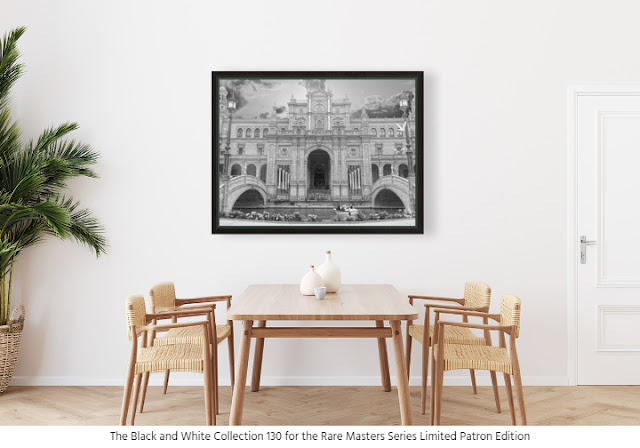
Seville Spain is one of my favorite places in the world, and the photo above is by far my favorite fine art photo of Plaza de España, a plaza in the Parque de María Luisa. Built for the Ibero-American Exposition of 1929, the plaza is an architectural marvel combining elements of the Baroque Revival, Renaissance Revival and Moorish Revival styles.

Seville is a wonderful, walkable city, with a wealth of fantastic sites and great restaurants. The light was amazing that day, even through the clouds, after several days of not so clear weather. As I positioned myself, I had to rush, rays of the sun were already warming the brick walls of the institute in front of me. I needed the clouds to part though, so I was patient. Then as a pair of white doves took flight, I knew I had the perfect shot, made even better by the row boat and the doves in the far interior taking flight at that moment as well.


When we visit Seville, we usually stay at Hotel Alfonso. A beautiful hotel, in the midst of all the gardens and close to just about everything you'd want to see in the city. The Universidad de Sevilla is next door and it's very close to Plaza de España, Real Alcazar, the canal and Palacio de San Telmo. Marriott usually comp'd our suites, so it was very nice to get the royal treatment.

We stay away from Hard Rock and tourist traps (expensive for no reason) and visit the local, independent restaurants instead. My favorite gastro memory from Seville: We got lost and ended up at a little dive of a pizza restaurant. Pizza in Seville? Yes, and more.

The owners, surprised to see Americans, were rather excited to see us order in broken Spanish as well. They didn't speak any English and somehow thought all Americans are dog lovers, so one of their children later brought in this rather large dog and kept feeding it bags of pizza toppings while we waited. Odd, quirky and a bit funny, especially considering how allergic I am. The pizza turned out to be enormous too and very good (though not really Italian at all). Sort of an odd mix of an American-inspired pizza with Spanish ingredients.

Getting to Seville can be a bit of an adventure. An easy way is to fly into Madrid and take Spain Rail. Trains to Seville run almost every hour or so from the central station in Madrid, and it's about a 2 hour and 40 minute train ride to Seville. 


When we visit Lisbon or Porto in Portugal we make it a point to drive out to Seville as well since it's so close. The whole Andalusia region is fantastic so it's a wonderful time. We love to visit in spring when the Olive trees are in bloom.

Nothing like driving with the windows open and drinking in the smell of Olive trees in bloom! It's a gorgeous, scenic drive whether you go from Lisbon to Seville or Porto to Seville. And if you drive either route, be sure to stop at the handicraft shops along the way. There's a reason Andalusia is famous for its leather, ceramics and embroidery. The pottery was always our favorite. The colorful plates, bowls and flower pots are beautiful, and each area has its own distinctive style.

It is true that one can write from anywhere, but it took a lot of special considerations to ship the crates of servers that I needed for technical how-to writing for Microsoft from one place to the next. But I never missed a deadline, and never told where I was writing from :)


About Hui Cha Stanek

Erstwhile Photographer and Long-time Publisher Hui Cha Stanek has always been the woman behind the scenes. She has managed the day-to-day operations of Stanek Media for the past three decades. Her work has been featured in a number of gallery shows and recently in a career retrospective with her husband. She prefers candid street photography and photography of people (though not traditional portrait work). One of her most famous works, Tip Toe I See You, is shown below.


Others, not to be missed:

Salt Water Taffy

Let Me See Too

My Hair Day Too Mom

Where Did it Go

You'll find these fine art photography works and more at:

https://www.pictorem.com/gallery/360.Studios?cat=10605&iframe=1

About William Robert Stanek

Seattle-based Photographer and Artist, William Robert Stanek, is a combat veteran who supports other veterans, is also a vocal champion of books and libraries. Not only an artist, he wrote nonfiction for over three decades as William Stanek and fiction as Robert Stanek. Find his fine art photography and prints from his original oil paintings in his online studios:

360 Studios - https://www.pictorem.com/gallery/360.Studios

1North Studios - https://www.pictorem.com/gallery/1north

Studio 24 - https://www.pictorem.com/gallery/24

Robert Stanek Studios - https://www.pictorem.com/gallery/robert.stanek

Connecting to his roots in his work is important to William Robert. The beautiful fine art print that follows is a view from within Mont St. Michel in Normandy France, part of his popular A Day at Mont St. Michel photo series. Special to William Robert as this is the region where his French ancestors are from--an ancestry William Robert has traced back from Quebec Canada to its origins in France.


Find William Robert's books at

Walmart https://walmart.com/c/brand/robert-stanek

Barnes & Noble https://www.barnesandnoble.com/s/%22Robert%20Stanek%22

Saturday, September 12, 2020

Connecting with My Friend Walter Dean Myers, Talking Dysfunction & Diversity in America

The first time I met, Walter, aka Walter Dean Myers, we connected, and this led to an odd friendship of a sorts. The thing that bonded us was our similar childhoods, though decades apart. Walter was born in August 1937, my mamma was born in April 1937. Walter lost his mother when he was 2, and my mamma and her sister Dolores lost their daddy even earlier. Walter was given to Florence and Herbert Dean after his mother’s death, my mother, her sister and her mamma moved in with their gramma who raised them for the next few years until their mamma married again.

Walter saw me and knew who I was the moment he laid eyes upon me, never asked why I had a copy of Hoops in my hand. He just understood. As a child, I grew up in a predominantly black neighborhood in Racine, Wisconsin, which I write about here. It was rough and tumble, which I also write about, and that was something Walter understood too as he and I both had to use our fists to defend ourselves at an early age.

His family became dysfunctional with alcohol and grief when his uncle was killed, mine when my step-father and sister died because of an explosion. The library and its books became my refuge, as books were a refuge and a solace for Walter.

Reading pushed us both to discover new worlds. For me, the classics. Treasure Island. 20,000 Leagues Under the Sea. Robinson Crusoe. The Time Machine. The Invisible Man. Journey to the Center of the Earth. The Last of the Mohicans. The Adventures of Sherlock Holmes. Around the World in Eighty Days. A Christmas Carol. Frankenstein. Dracula. The Adventures of Huckleberry Finn. The Lost World. And on and on.

Though never an apt pupil, Walter wrote well in high school and his English teacher recognized this, encouraging him to never stop writing no matter what happened to him. My English teacher in the 4th grade recognized my writing skill and encouraged me to write for and edit the school newspaper, as did my Uncle Wally and both of whom told me to never stop writing, never stop challenging myself.


Walter dropped out of high school and joined the army at 17. I joined the air force at 17 after finishing high school because I was homeless and had no other options.

Walter was one of the most prolific writers, with more than 110 books to his credit, and is the recipient of a lifetime achievement award in writing for young adults, as well as many other awards. I also became one of the most prolific writers, with more than 250 books to my credit and counting, and have been nominated several times for lifetime achievement awards in writing.

After Walter passed away in 2014, I blogged about one of his last essays decrying a lack of diversity in writing, saying that diversity existed in writing it just wasn’t always plain to see. Diversity in my books has led to controversy. I haven’t let controversy change my views or my writing, nor have I kowtowed to White publishing, nor to the conscientious objectors who worship at the altar of George RR Martin and abhor veterans.

How odd that even after decades and decades, books must still be thought of as white or black, or for whites or for blacks. It was, after all, an interracial award for children’s books that put my friend Walter Dean Myers in the spotlight in 1969. We humans excel at putting up fences, we just don’t know how to take them down.

Thanks for reading, I’m William Robert Stanek, Microsoft’s #1 author for nearly 20 years, and author of over 250 topselling books.


Thursday, January 16, 2014

Big Books, Big Contracts: The Road to Success is Paved With Potholes (Or Alternately What It’s Like to Write 150 Books & Still Have to Give 150% Every Single Day.)

I'm Robert Stanek. Last year, I signed an 8-book six-figure contract with my long-time publisher. In the past, I’ve had contracts for $70,000 and up for 3 or 4 books, but nothing so substantial. It was a wonderful confirmation of my commitment to the written word and it felt great to have a publisher back my work so strongly, especially in the uncertain landscape of today’s publishing reality.

Since I’ve been talking about the contract and the books lately, I often hear from people who congratulate me on “my quick success” and “my rapid rise to acclaim.” I am, of course, a critically and commercially acclaimed author of more than 150 books. I also am one of the world’s leading authorities in the subjects I write about. I am, however, anything but an overnight success. I’ve been a writer for 30 years and only 20 as a published professional.

I earned my stripes in this crazy business when I wrote for many years for the simple pleasure of writing itself. It wasn’t until 1994 that I signed my first contract. It wasn’t until 1995 that my first book was published. It wasn’t until 1996 that I was able to write full-time.

My full-time work as a writer is as a technology journalist and nonfiction writer. In those early days, I wrote articles for leading publications like PC Magazine and Dr. Dobbs. I also wrote books for leading publishers like Macmillan, Pearson, McGraw Hill, Microsoft, and O’Reilly Media. For articles, I often received $1 or more a word. For books, I often received solid five-figure advances. That was, of course, success, and I did in fact rise quickly, becoming a recognized world leader in my field in only a few short years.

Success, however, can be short lived. In publishing, a writer’s last success doesn’t necessarily pave the road to the future. A writer’s future is determined by his or her next book and often also by factors the writer cannot control. The world changes every day. Trends and tastes shift. Yesterday’s media darling can be tomorrow’s nobody.

I’ve lived the change firsthand. Between 1995 and 1998, I signed more than a dozen contracts, wrote books as fast as I could write them for readers who couldn’t get my books fast enough. I was on fire. In those few short years, my books caught on. I thought the ride would never end, until it did.

The market changed. Trends and tastes shifted. The hot topics of the day were flooded with a smorgasbord of offerings. There weren’t just 10 or 20 books on that hot topic, there were a hundred. Eventually, this oversaturation cannibalized sales of all similar books. Thus, even as my success and career were hitting new highs, I was left scrambling.

But unlike many of my contemporaries at the time, I saw the light of that oncoming freight train. I knew my options. I knew what I had to do.

I could continue to write books in an oversaturated market, try to live with sales that were a tiny fraction of what they had been, or I could look to new opportunities. I chose plan b—the new opportunities. I risked everything, left my old publishers who weren’t interested in my new ideas, and went out looking for publishers who were interested in my new ideas.

The change meant I had to rejoin the working world. I took a job with a tech company in Seattle and joined the ranks of the marathon commuters, driving 140 miles round trip every working day. I continued writing in the evenings and on weekends. I continued to pitch my new ideas to new publishers.

Days and weeks passed. Months too. By the sixth month, my wife and I were seriously considering our options and wishing we’d sold the family home and moved to Seattle months ago.

But I didn’t give up. Instead, I polished my ideas yet again and sent them out via my agent to a new publisher who I heard was looking to do something different. I just hoped that the “something different” they wanted would be my radical idea for a new series of books.

The wait to hear back from the publisher was agony because at this point it was make or break. If I heard back from the publisher and it wasn’t good news, my writing career likely was over. If I heard back from the publisher and it was good news, there was hope, but no certainty.

Thankfully, I heard back from my agent within a few days and the news was good. The publisher wanted to meet with me. The publisher wanted to discuss my ideas.

During the meeting, it was clear that the publisher liked my ideas but I’d need to provide sample chapters, expand the series details, have more face-to-face meetings, and generally do more to convince them. The hard part that followed required a leap of faith. I couldn’t do all that was required of me, in the time that was required of me, and keep working full-time elsewhere. I had to quit the day job and proceed, or keep the day job and let the dream die.

I chose the dream. I gave notice, worked my last two weeks while I continued developing the materials needed. A few weeks in, I learned the publisher had one idea for the series and I had another. Worse, the concepts were radically different.

I thought for sure disaster was ahead. Thankfully, the publisher did eventually sign me to a two-book contract. A contract to do things their way—and not my way. 

However, the sample chapters I’d written over the past weeks were for my series concept and not theirs, so I kept writing the books my way. For this publisher, it was something unheard of for any writer to go outside the standard or to deviate from fixed standards. But my editors loved the final chapters I submitted, and I completed the work in its entirety ahead of schedule—so many weeks ahead of schedule they didn't quite know what to do, and this also was something else that was unheard of.

In fact, I was so far ahead of schedule, that the book’s publication dates were moved back several months. Those several months proved critical, as they allowed the publisher to showcase the books at a major industry event when the publisher otherwise would not have been able to. And the books done my way were smash hits at the event. 

The rest as they say is history. Those contracts were followed by two other contracts from other publishers that I’d contacted previously. Suddenly, I was back in the publishing business.

That little series I started? That series would eventually go on to become one of the biggest blockbuster series for the publisher.

Those first books I wrote in that series? They set the foundation for the entire series and became critically-acclaimed, award-winning bestsellers.

Not too shabby for ideas nobody wanted and no one but me believed in. Sometimes in life you must take that leap of faith. Sometimes you must believe in yourself when no one else does. Sometimes you must follow the wrong path to find the right one.

Thanks for reading,

Robert Stanek

Saturday, October 12, 2013

Some people are the dog. Others, the tail on the dog. Or alternatively why I’m celebrating my 1000th+ title in active worldwide distribution.


Celebrating my 1000th title in active distribution isn’t about numbers. It’s more about helping others understand today’s publishing reality. The reality of today’s working-class writers. In publishing today, a writer who sells a million copies of 1 or a few books is a superstar while a writer who sells millions of copies of many books over many years may not even be considered by some to be successful. That’s because the publishing industry is designed to recognize racing rabbits—those thoroughbred superstars who knock the covers off the ball and sell, sell, sell copies of a single book or a few books by the boatload. The publishing industry isn’t designed for the working-class writer—those tortoises who barely get in a few steps toward first base while the superstars are sliding in to home.

But this tortoise has news. You can be a tortoise and reach home plate too. It takes much longer, requires much more dedication, but it can be done.

Although I don’t have any single book that has sold a million copies, I do have many books that have collectively sold millions and have collectively been checked out of libraries millions of times as well. In fact, earlier this year, I celebrated the publication of my 150th book. Well, at least the 150th book I counted amongst a much larger number of books of mine that have been published since 1995. For you see, the working-class writer doesn’t have the luxury of writing a book a year or a book every 2 or 3 years. A working-class writer must write 3, 4, 5, or 10 books a year to pay the mortgage, to put the kids through college, to feed the beast.

Many books written for many years help to give tremendous breadth and depth to any working-class writer’s body of work. All those books released in various editions, as audio books and ebooks, as sets and compilations, and as translations into many languages over many years create mountains of active titles in distribution. When those mountains of titles begin to wag the tail on the dog, it no longer matters whether you are the dog or the tail on the dog because at that point you are the whole enchilada. You are the dog, the tail, the dog wagging the tail, and the tail wagging the dog.

My numbers would in fact make most publisher’s drool. I’ve never had a book that failed to sell. My books earn back their advances. My books have long legs and typically have steady sales year after year after year. And by sales I mean all purchases, downloads, check outs, etc that result in a reader getting a book to read. But my books sell collectively in a relative trickle.

When you look at all the various editions, formats, sets, compilations, and translations of my books and track those as individual titles, you find that I’ve had many thousands of titles published over the years. There are in fact over 1,000 active William Robert Stanek titles available right now today (and not including an additional 400 or so of my titles in the English language that don’t even have my name on them as they are sold under brand names). Online bookstores, like Amazon or Barnes & Noble, carry over 600 of my English language titles and there are over 900 of my English language titles in library distribution. You can check these numbers yourself by counting all the William Stanek, William R. Stanek, William Robert Stanek, and Robert Stanek English-language titles.

None of these titles individually is a blockbuster, but all of these titles sell. They sell in that relative trickle I spoke of a moment ago. (For a complete list of my books, read: Books by William Robert Stanek.)

A trickle that turns individual snowflakes into snowballs coming done a mountainside and snowballs into an avalanche that brings the mountain down and levels the playing field with the superstars of publishing. My publishers don’t like it when I give exact numbers, but consider this: if you count only 1,000 of my active titles and say those titles sell only a miniscule 1 copy a day on average, that’s still 365,000 books sold a year.

Being the tail on the dog’s not looking so bad after all. Is it?

Thanks for reading! For more about my 20-year career as a writer, read "How I Made This Crazy Thing Called Writing a 20-year Career."


Robert Stanek